Showing posts with label music. Show all posts

Sunday, 30 August 2009

Let's be Frank


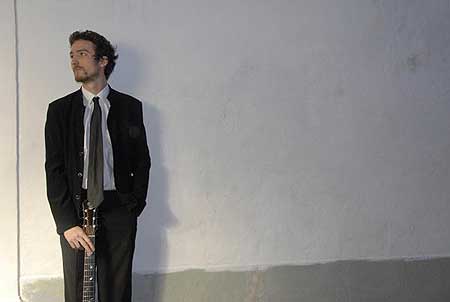
I originally carried out this interview at the end of last month for a freshers' magazine for Cardiff University Students' Union. I feel, though, that Turner was intelligently articulate enough, with enough interesting ideas, to warrant a re-print in transcript form, rather than as part of an article:


You’ve been touring an incredible amount recently - how’s that been going?

Touring is my favourite thing in the whole world, so I always get to the end of every year and look back at the number I’ve shows I’ve done and feel like I could have done more. I’ve just been out with The Offspring doing an arena tour in the States, which was pretty intense and weird.


You’ve done that tour with The Offspring; you’ve done a split EP with Jonah Matranga - do you find all this sort of thing a case of “pinch me!” or do you just get used to it?

I hope I never get too used to it. When I was out with The Offspring I ended up meeting the guys from Converge, who are one of my favourite bands of all-time, ever, so that was a big deal. And meeting Pennywise and The Offspring and that sort of thing - it’s always fun. It’s always cool. The Jonah thing is funny; I’ve known Jonah for a long time now, and I count him as a close friend, but I do occasionally have to pinch myself when we’re hanging out


Do you find that there is a different atmosphere when you’re playing your own headlining shows?

They’re different things but they’re challenging and rewarding in different ways. The satisfaction you can get from playing as a support act when you start with three-quarters of the crowd not really knowing who you are or giving a shit, and ending up with a sizeable chunk of them cheering - that’s a really, really good feeling. It’s kind of like: “I’m achieving something with my life!’ But headline shows, for me, it’s important to try and make sure people are going away thinking “it was the best gig I’ve ever been to.” It’s like the stakes are upped somewhat.


Do you find there’s a difference in general with playing different types of shows, for example different areas of the UK, or university towns?

A little, but I try to be quite egalitarian in my approach to the show. I want to play and do the best gig I can, regardless of who’s there and who’s watching.


You seem to be quite egalitarian, as well, in the way you approach your music in general. You seem to be making folk music in an almost ‘punk’ way, keeping yourself very open and accessible: is this a conscious decision, or just something which comes out of having spent a few years playing in Million Dead?

It’s a conscious decision. My favourite thing about punk rock was the kind of iconoclasm, you know? The idea of a rock star is illegitimate; there shouldn’t be a massive divide between people who listen to music and the people who play music, and if there i,s the music in question becomes boring and irrelevant. Also, the minute I finish playing a show, I’m just the same as everyone else at a gig, so if people want to get in touch, my email address is on the website and I hang out. The whole Led Zeppelin approach to musicians always grated with me slightly; it’s not how I was brought up by my mum, to put it that way.


Your lyrics also have quite an open-book quality about them. Is that something, again, that you try to keep?

I don’t get too analytic about songwriting and lyrics - I just try to write the best stuff that I can, however that comes out. A quality that I like in music that I listen to is honesty, and I guess that will come across in the stuff that I do, as well. It’s important for me to point out that I’m not quite one of those people who puts their entire life on the internet or whatever. There is very much a line between my personal life and what gets said in public. I have a secret enclave that’s left, which is actually my personal life. But I do think that you should write about what you know, and that’s how it comes out for me.


There seem to be quite a lot of literary influence at play in your lyrics, as well.

Well spotted, thankyou! I’m not particularly well-versed in poetry or anything like that, but I like reading Philip Larkin and T.S. Eliot, stuff like that.


Do you have specific influences shining through into your lyrics, and are they as important to you as musical influences?

Yeah, I’d say so. Aside from particularly Larkin, who I’m very interested in, there’s a lot of other lyricists who mean a lot to me personally, whether it’s Craig Finn from The Hold Steady or Bruce Springsteen or whatever. I’m a lyrics guy when I’m listening to music, so yeah, I pay a lot of attention to that kind of thing.


Do you think your influences have changed over time, or do you find they’re still the same as when you first started out solo or were playing with Million Dead?

Yeah, my influences change, partly just through hearing other music. I had this thing about two years ago where I suddenly ‘got’ Bob Dylan; it was really weird. I’d kinda not really got Bob Dylan before, and I woke up one morning and raced down to the breakfast table shouting “I’ve got Bob Dylan! I understand it now!” so I’m on a big Dylan trip right now, Things kind of move on - when I started playing solo stuff, I think Neil Young was the single biggest single influence for me on what I was trying to do, but that’s certainly changed over time. Springsteen’s loomed large in my music taste of times gone by.


I’m guessing you’re more settled with a backing band now, and your new single [The Road] seems quite band-driven - is that reflective of the new album as a whole?

Yeah, I think so. Yes, it does. In a way, what happened was on previous albums I played most of the instruments myself, apart from the drums, and then I’d go and teach them to the guys in my backing band, who are all much better musicians than me, and we would end up playing live version that sounded better than the recorded versions. It seemed pointless to do that again, not least because the lineup of people in my backing band stabilised about six months ago. It’s still my songs that are written in the same way, but this time round we’ve rehearsed them before going into the studio and then played them on the record. I think the record does sound a bit more band-orientated. The other thing I think is that whether you’re conscious of it or not, for me anyway, when you write a song there’s an imaginary room in your head which you’re gonna be playing it. On the first album the imaginary room in my head was a pub or a bar or something; for the second album it was maybe a club with like 200 people in it; now the last few shows I’ve been doing have been a bit bigger than that, so I think that naturally my inclination has been to try and have a bigger sound and to write bigger songs. Having said all that, every song on the new record can be played solo with just me and a guitar if the need arises, so that kind of dedication to the solo thing remains.


So when you’re writing a song, do you try and envision it played solo as well, or do you write it for a band?

I believe that songs are like bodies in the sense that they have a skeleton which is basically a chord sequence, a melody and a set of lyrics, and you can present that in a number of different ways. Certainly a good song should be versatile, you know, it should have that skeleton, that sort of soul, and you can dress it up in a number of different ways. So yeah, it’s important to me that songs can survive in different versions and I think it’s interesting and fun and artistically valid to mess around with songs and play them in different ways.


Is that skeleton something you look out for when you’re playing covers? You seem to have done a really diverse range of them - do you just go with what you like?

Yeah, it’s the same thing. My main concern in life is songwriting. I’ve long ago accepted that I’m not some kind of super-progressive musicologist or anything like that: I just like good songs. My taste in music is basically defined around whether I think people write good songs, and I don’t really care what scenes or trappings or assumptions might come with any band; if they write good songs, I’m interested. I think Abba wrote good songs, I think Springsteen writes good songs - they way they’re presented is less important to me, and I think that playing covers is a good way of drawing out the skeletons of songs.


Are you going to be playing many covers on your UK tour this autumn?

Maybe one or two, but we’re at the stage now where I’ve got three - well, three-and-a-half, if you count The First Three Years - albums of my own material, so I think I’ll probably concentrate more on my own stuff.


Do you try to keep a mix in your setlist of older and newer stuff, or is it going to be more focussed on the new album?

I got to shows as much as the next person, and I know how annoying it is if you go and see a band that you love and they don’t play any old songs - it can be really disheartening, so I try and write a crowd-pleasing setlist. At the end of the day, I consider myself to be an entertainer above and beyond being an artist, and my job is to make sure that if people pay their money to come and see me that they have a really great night out. I don’t want to be one of these artists who’ll show up and play an entire set composed of b-sides or entirely new material. Obviously I want to play quite a lot off of the new album on this tour, because it’s more fresh and interesting to me, but I’m still obviously going to play ‘the hits’.


Finally, with regard to the new album, are there any particular lyrical themes which are coming through on it, or is it a mixed bag?

It has its offshoots, but the essential heart of the album came from Beans on Toast - my friend Jay, who’s an English folk singer. We were having a conversation about an older songs of mine called ‘The Ballad of Me and My Friends’, which is quite a pessimistic song; he was asking why I felt like like. as the song says, we’re all going to have to give up doing what we love in time and move on, and I didn’t really have an answer for him. That paranoia about what he’s said kind of spiralled out of control and became a whole album’s worth of lyrics. I guess the theme of the album is trying to grow old disgracefully and romantically and adventurously.

Saturday, 4 April 2009

But is it blitz?

I came around fairly late to the Yeah Yeah Yeahs, I have to admit. While I was aware of them as they released Fever To Tell, 'Pin' and 'Maps' aside, their debut didn't make much of an impression on me. That all changed, though, at Reading 2006. I didn't fancy seeing Hundred Reasons with my best friend, so I figured I'd chill towards the back of the main stage for a bit. It was definitely a good decision; I experienced one of the most electifying live sets I've ever seen. As soon as I got home, I purchased Show Your Bones and instantly fell in love with it.

So, it's two-and-a-half years later and Yeah Yeah Yeahs are about to release their third album, It's Blitz! While undoubtedly eagerly anticipated, the album has got people talking - especially as it's been streamed for weeks now on Spotify. Much has been made of the band's "new direction", and when I first heard it my response was much the same as many other people's: "but where are the guitars?"

Because the guitar sounds on It's Blitz! are sparse, even absent on some tracks. The songs are far more synth-driven than anything the band have released before. The question is: does it work? Well, yes - in parts.

The chorus of 'Zero' brings to mind Blondie, which is by no means a bad thing, and 'Heads Will Roll' takes their new "disco" aspect into a dizzying spin. Best of all, however, is 'Hysteric' - this album's equivalent of (you've guessed it) 'Maps' or the wonderful'Dudley'. It's yearning, with a crushed vocal and a spine-chilling guitar hook that I've been incessantly humming for days.

There's little all-encompassing guitar sound such as that which made Show Your Bones so fantastic. It's a shame, too, that the few guitar-led tracks on It's Blitz! are the dullest, the most Yeah Yeah Yeahs-by-numbers tracks present here, particularly 'Dull Life' and 'Shame and Fortune'. It leads you into a quandry: you reach a point where you've just had too much synth (it does, after a while, just get a bit samey) but when it drops away for a track or two, you're left reaching for the skip button.

It also feels like a bit of a waste, too; Nick Zinner is arguably one of the best guitarists around right now, able to handle delicate melodies and spiky riffs with equal dexterity. While Zinner claims that he was open-minded to this change in instrumentation, he has admitted that he was strongly encouraged, nigh on pushed, into it.

It's Blitz! is by no means an instant album. It's also the sound of the Yeah Yeah Yeahs doing something fairly different from what they've put out in previous releases. It's a grower, but I am left wondering if they've limited themselves somewhat in trying to broaden their horizons. It's not as good as Show Your Bones, but then again - what could be?


Yeah Yeah Yeahs - Hysteric

Monday, 23 March 2009

Covering up

Loads of songs which top the charts are cover versions, either popular, easily recognisable previous hits or flops dredged from the murk-laden depths of obscurity. Who needs new material when you can flog a dead horse and still make a killing? Even YouTube, that zeitgeist bastion of collective consciousness is filled with video upon video of idiots cracking out abysmal bedroom cover versions of their favourite songs. That said, YouTube is filled with video upon video of idiots doing a lot of things, so maybe it’s not the best of benchmarks.

There are some brilliant covers out there – Badly Drawn Boy’s version of ‘Come On Eileen’, for instance, never fails to scrawl a smile across my face. There are some downright shocking ones, too – Avril Lavigne wailing her way through ‘The Scientist’, anyone? But what are the factors that mark the good from the bad?

A few weeks ago, I bought a copy of NME for the free compilation CD of Cure songs it proffered. The first track on said CD featured Robert Smith talking about cover versions in general; maybe it was this that got me thinking. He theorised that there are two ways to tackle a cover version: faithfully attempting to reproduce the original version, and completely reassembling it with a whole new spin.

I’ve always found the idea of a completely faithful cover version to be a double-edged sword. A decent cover version can urge you to seek out the original version of a song; it can get you into artists you’d never previously considered (on this note, I feel I ought to – embarrassing as it is – confess that it was My Ruin covering ‘Do You Love Me?’ which drove me towards Nick Cave and the Bad Seeds; yes, they may actually have changed my life). However, if a song is good enough to warrant being covered (because, let’s face it, nobody really bothers covering the shit songs; they’re too uninspiring), what’s to say that a straight run-through of it will be any improvement? It probably won’t be.

It’s like James Blunt covering ‘Where is My Mind?’. I’ve posted the video below, because I feel that if such an atrocity has been inflicted upon my poor, undeserving ears, I at least deserve the comfort of knowing that everyone else has been through the same experience.


It doesn’t differ too dramatically from the original, does it? Obviously in terms of quality it does, but in form it’s really not such a great distance apart. ‘Where is My Mind?’ does sound mellow; however, when taken in context with the rest of the Pixies’ material, this low-key, semi-acoustic track sounds sinister. It’s an “oh shit, I’m actually scaring myself here” type of quietness, not a “let’s repackage this with some nasal vocals and sell it to middle-aged housewives” type of quietness. And hence Blunt falls flat.

If you’re really that inspired by a band’s sound, surely it’s more effective to use them as an influence? Don’t make the assumption that you can take them on on their own terms and win. It’s a bloody dangerous game, and one that people usually seem to lose (Elvis Costello’s sublime cover of ‘She’, aside).

No, a good cover version should function almost as a remix, as a reimagining. Doing something new with a classic is far more admirable than simply echoing the track back verbatim. Create something new, please: you practically owe it to everyone listening. It’s by far more refreshing to look up the original version of a song and to hear something completely different from what you were expecting. I mean, upon hearing Gary Jules’s teary, piano-led run-through of ‘Mad World’, would your mind really have skipped to a slab of melancholic ‘80s electro? Mine certainly didn’t.

The ultimate cover version for this – the ultimate cover version, full stop, it could also be argued – is Jeff Buckley’s version of ‘Hallelujah’. While I do resent the fact that Buckley’s version has been absorbed into the canon of classics as the definitive version of this track (I maintain that the original Cohen version far outstrips it), I do seriously admire the way in which Buckley manages to completely change the tone and dynamic of the piece: Cohen is steadfast, almost defiant; Buckley sounds nigh on irreparably broken.

This does make for lazy re-covers, though. Alexandra Burke dragged ‘Hallelujah’ kicking and screaming (or perhaps more sobbing and wincing) into the mainstream over the Christmas period. Blatantly, though, she was simply emulating Jeff Buckley. Bad move, love; you didn’t manage to pull it off successfully. Nor did you really manage to tickle my tear ducts; Buckley sounds like he means it, while Burke sounds like she’s just trying really hard to try to sound like she means it. Apparently millions disagreed with me, though.

Interestingly enough (or so I thought), I read an article a while back which suggested that almost every singer who covers Hallelujah now covers Buckley’s version rather than the original. It also asserted that the song has now become so far embedded in popular culture that it has become aural shorthand for generic sad emotion. The article itself can be found here: http://www.clapclap.org/2007/04/hallelujah.html

Is it even possible now to do anything new with a track which drags so much cultural weight behind it? Yes, if you’re deft enough. One of my current favourite songs is Emmy the Great’s ‘First Love’. While not a cover in the strictest sense of the word, ‘First Love’ draws heavily upon ‘Hallelujah’, even appropriating the chorus as its own. But it works, because it’s knowing – there’s even a direct lyrical reference to “the original Leonard Cohen version”. I’ve started to get a bit evangelical about this song, to be honest, simply because I think it’s a fantastic example of how covers can be fresh and vibrant, really lending something to the artist brave enough to take them on.


So there you are: an original take on things is where it’s at. Well, according to me, anyway.

Friday, 13 March 2009

Jamie T, Oxford Academy 2, 02.03.09

(Note: yes, I am aware that this is a bit late. Bear with me, though; I've barely had time to breathe between then and now)


Oxford's Academy 2 seems a slightly strange place to be watching Wimbledon's Jamie T. While satisfactorily intimate, the venue carries a slight yet inescapable arua of the church youth club, which feels a little ill-suited to tales of binge drinking, uppers and Lahndan-tahn debauchery. No matter, though: Treays takes to the stage looking triumphant regardless. The cocky bugger.

Opening with the raucous 'Operation', Jamie T - along with four-piece backing band the Pacemakers - unleashes a rattling run-through of a genre-melding 70-minute set which barely drops its pace below a sprint.

Ostensibly an excuse to try out new tracks live, the five songs previewed tonight suggest that Treays's as-yet untitled second album will take a slightly different tangent from his critically-celebrated debut. 'Sticks and Stones' hints at a move towards a more conventional verse-chorus-verse song structure, while '368' is almost approaching anthemic and encore track 'Emily's Heart' is far softer and sweeter than anything he's released to date.

New album in the pipeline or not, this was never really about hearing something about new - a fact more than underlined by the rapturous reception received by the Panic Prevention tracks, which are here in abundance. 'Sheila' may be the "one track" which Treays has become instantly associated with, but the reception of album tracks such as 'Ike and Tina' almost rivals the likes of 'Calm Down Dearest'. And by the time he reaches 'If You Got the Money', you can barely hear Treays's vocals.

What's most striking about the performance, ironically, is how well-honed it is. It's occasionally shonky and more than frequently off-kilter, but it's a ramshackleness which belies a tight musicianship; the sprawling 'Alicia Quays' sounds vastly improved from 18 months ago. Clearly the downtime has been put to good use, then.

Leaving the stage amid a flood of promises that such a disappearance from the live scene won't be repeated any time soon, you can't help but think that maybe that first look of triumph wasn't self-knowing, after all. A cocky bugger? Certainly. Justifiably so? After a performance like tonight's, it's hard not to think that this may just be the case.

Emily's Heart (rough quality)


E.

Monday, 22 December 2008

Songs of 2008

Ah yes, the cliched "top ten" list that's being trotted out by all and sundry right about this time of year. Blame it on the fact that winter keeps everyone indoors - too much time to think about these things, see. Music's actually really exciting me at the moment; I seem to have fallen back in love with it, and fallen hard enough to have grazed my knees. Not neccessarily bands that are actually new, even, but bands and albums that are new to me, at least.

Anyway, let's not drag this triteness out any longer than we have to...

10. The Killers - 'Human'
Has anybody actually managed to get to the bottom of the human/dancer conundrum? Didn't think so; the lyrics are abstract enough to be utterly nonsensical, but when that throse drums kick in under a synthesiser worthy of the '80s, I defy you not to sway toward the "dancer" end of the spectrum.

9. Coldplay - 'Viva la Vida'
Joe Satriani had a point when he piped up that the melody from this track was nicked damn near wholesale from his 'If I Could Fly', but he ought to feel flattered, really, if this is what comes of it. Swathes of terse strings and lyrics about Roman cavalry choirs usher in a gloriously tottering climax, making damnation at the hands of Saint Peter suddenly sound magical.

8. The Streets - 'Everything is Borrowed'
Mike Skinner getting philosophical without sounding like a twat: who'd have believed it? One of the catchiest samples of the year underpins some almost poetic lyrical turns about how "you're never nothing if you didn't disappear". All in all, it's almost life-affirming. Pity about almost all of the rest of the album, though.

7. Lightspeed Champion - 'Galaxy of the Lost'
Remember Dev Hynes, purveyor of near-unlistenable noise? Well, now he's Dev Hynes, purveyor of ridiculously pretty alt-folk tunes. 'Galaxy of the Lost' showcases everything that's great about Dev's new band, with some of the most honeyed harmonies since Belle and Sebastian, not to mention fantastically wry, self-deprecating lyrics about vomiting into someone else's mouth. No, really.

6. Elbow - 'One Day Like This'
When the first piano flourishes begin, you suspect you may be onto something. You may not suspect it's the seven minute mini-epic which then unfurls, however. Sweet and simple, this is almost apologetic in its own majesty. You'll be feeling the sun on your face, even in the depths of the bleakest mid-winter.

5. Laura Marling - 'The Captain and the Hourglass'

When Laura Marling begins to sing about selling her soul to Jesus and men with hearts of sand, you could easily forget the fact that she's seen a mere eighteen summers - her voice certainly belies it, anyway. Her debut album, 'Alas I Cannot Swim', is a gentle, acoustic triumph, and this stand-out track marks Marling as a definite one to watch out for in the future. Stunning.

4. Chris Letcher - 'Scenes'
Chris Letcher is in a baffling position - well-known in his native South Africa thanks to his work with Urban Creep and acclaimed by critics, he is nonetheless almost completely unknown. And that, frankly, is a crime against music. Unnerving yet intriguingly catchy, 'Scenes' really ought to have made the world sit up and take notice, and the fact that it didn't is simply the music world's loss. Gutted on their behalf.

3. Conor Oberst - 'Lenders in the Temple'

"If you love me, then that's your fault", Oberst claims plaintively here. No, Conor: it's yours. When you insist upon writing songs as beautifully sorrowful as this, how could we resist? This track seems to carry the weight of the world upon its shoulders, but bears it like Atlas. Just try to resist the urge to weep when you hear the money clinking at the end.

2. The Mountain Goats - 'Marduk T-Shirt Men's Room Incident'
Heart-wrenching cadences, the most effective use of strings this year and chiming backing vocals make for compulsive listening here. Dark and stripped-down, this is a luscious highlight to the amazing 'Heretic Pride'. Darnielle's tenderness is enough to make you wish that you were that girl in east Berlin - a deliciously chilling thought.

1. Nick Cave and the Bad Seeds - 'Jesus of the Moon'
While 2008's 'Dig, Lazarus, Dig!!!' was widely accepted to be a fantastic album, it certainly wasn't an immediate one. Despite this, from the very first spin, 'Jesus of the Moon' shone out as its glistening centrepiece. Cave's gift for taking an unconventional look at an oft-used image goes from strength to strength, making me completely sick with jealousy. This wouldn't be out of place on 'The Boatman's Call', which is obviously a good thing; mellow, with a subtle jazz vibe, this is one track from 2008 which I can't stop returning to.


Don't just take my word for it - www.hypem.com - check them out for yourself.


E.